Image Archive · 3 plates
Mount Fuji
Mount Fuji rises 3,776 metres on Honshu, the highest mountain in Japan and an active stratovolcano whose near-perfect symmetry has been painted, printed, and photographed for centuries. Its cone is snow-capped for much of the year, and on clear winter mornings it is visible from Tokyo more than 100 kilometres away. This archive gathers original photographs of Fuji from the vantages that define it: the spring view across the pink shelf of Chureito Pagoda’s cherry blossom, the still reflection in the Fuji Five Lakes where the mountain doubles on the water, and the bare red-brown slopes of late summer when the snow has gone and the climbing season opens. Every frame was made for this archive to capture a specific season and light rather than to copy the one calendar image everyone knows. Together they show why Fuji-san is treated less as a mountain than as a subject — a single form that changes completely with weather, hour, and the season pressing against its slopes.
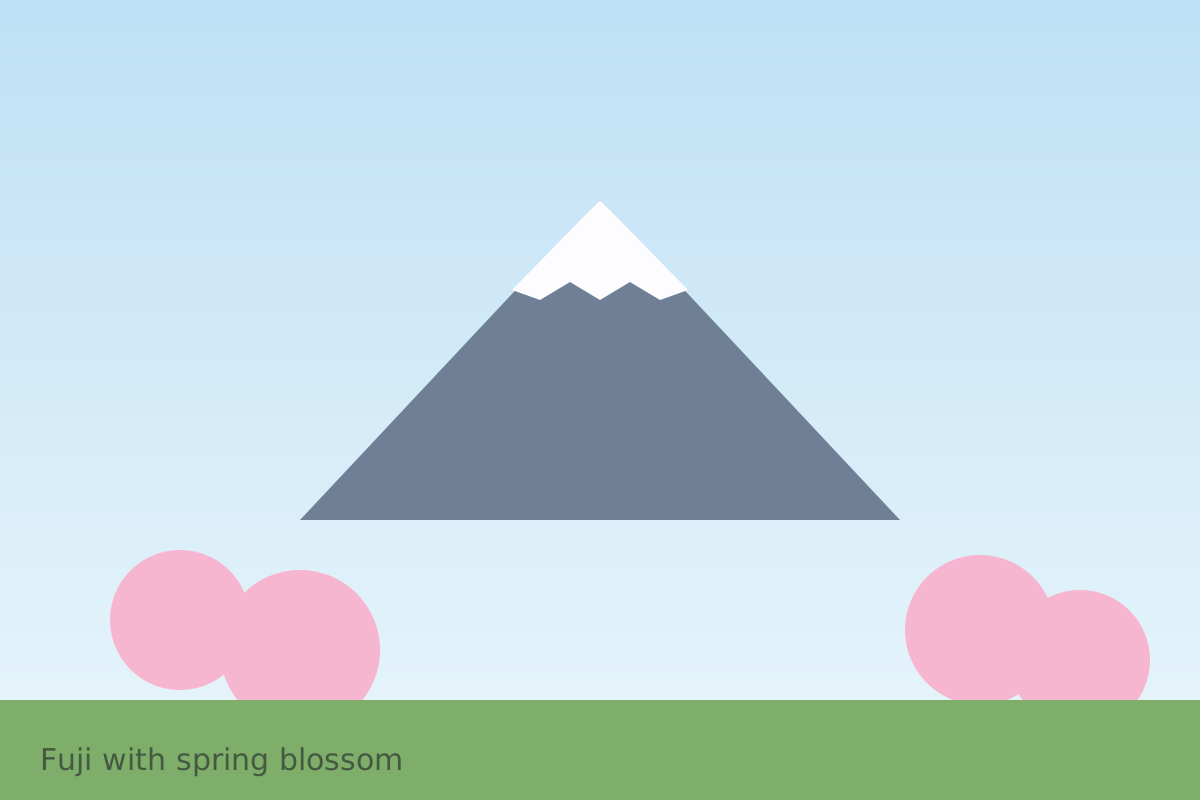
Spring blossom
The spring view: Fuji’s snow cap framed above a shelf of pink cherry blossom, the pairing that defines Japanese spring imagery.
Photo © Archive Gallery — CC BY 4.0
Reflected at dawn
Shot at first light on one of the Fuji Five Lakes, the windless surface doubles the cone into a near-perfect mirror image.
Photo © Archive Gallery — CC BY 4.0
Bare summer slopes
Late summer strips the snow away to reveal the volcano’s red-brown scoria — the brief window when the official climbing season is open.
Photo © Archive Gallery — CC BY 4.0